
Brown Fields
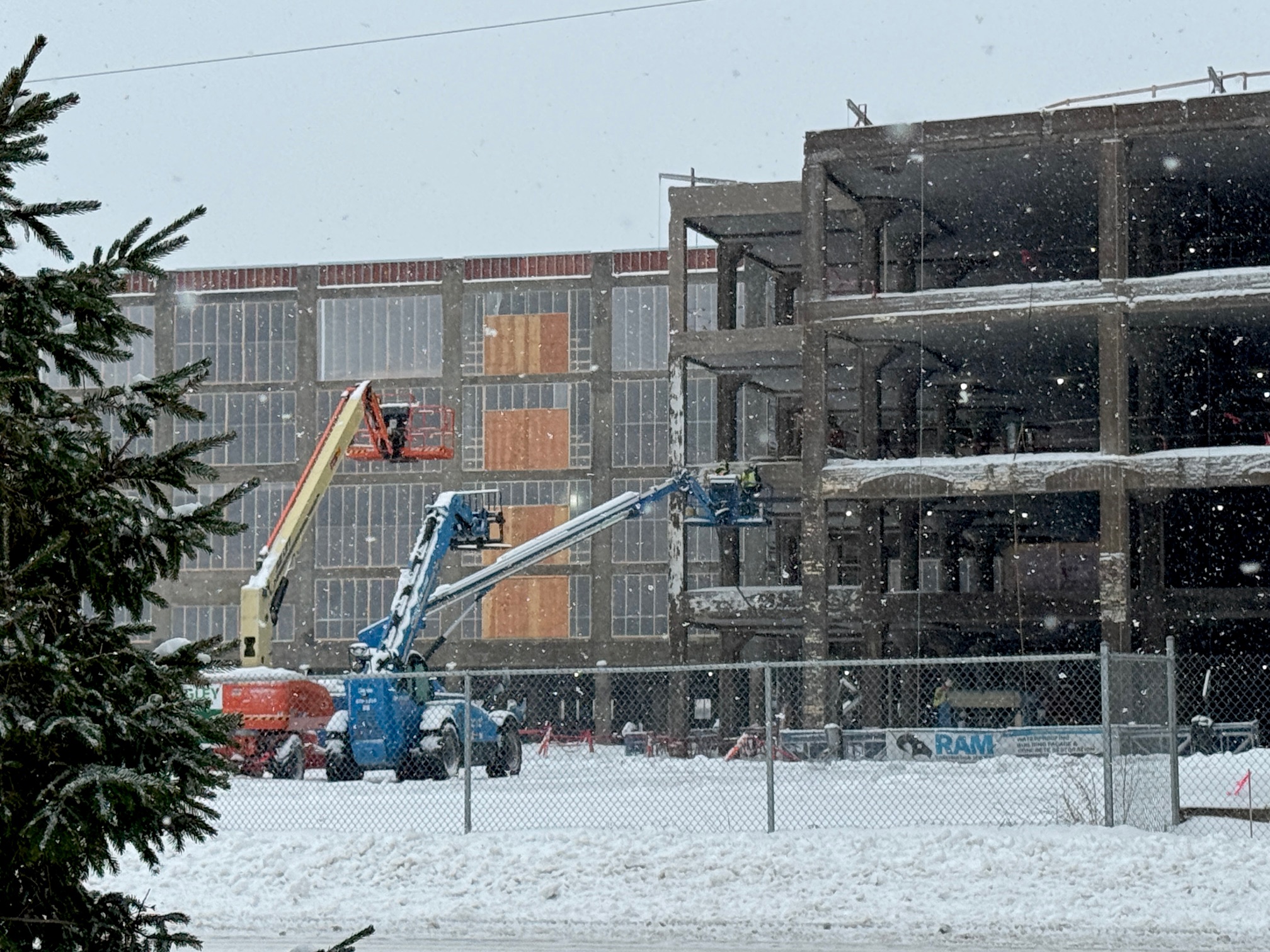
One by one by one, they take
The hollow factories down. It gives
The sons of sons of sons
Of workers work to do. They don’t
Just blast or bash the buildings all to pieces:
The job is difficult and careful.
First, the guts come out, and then
The skin comes off, sheet-metal
From the roof and walls. The skeleton, revealed,
Gets picked apart by cranes, the massive beams
Unwelded, lifted free. The scrap is carried off
In trucks—to China, maybe—and the men
With jack-hammers and yellow bug-machines attack
Thick concrete-slab foundations, while helpers
Hose to keep the dust from swirling up
And blowing free, to coat the neighbors’
Ancient shops and streets, to blow
In Old Man Winston’s windows.
Methodical and slow, the workmen doze
The rubble into mountains, scrape the ground
As naked as the day those other
Men, the dead, commenced
Construction eighty years ago.
Bit by bit, the mountains disappear.
By summer, fields where factories
Once stood fill up with blowing
Trash that swoops and snags
On thistles in the random breezes;
Doves lie secret in their nests amid
Unruly sprawl of rag-weed
And of Queen Anne’s lace
And startle into flight on those so rare
Occasions when a person passes.
Sandwich Generation
I toss Jane’s forgotten lunch-sack on the passenger seat and drive
like crazy just to wait
in the line of cars and trucks and buses
on the freeway ramp
and think how many stinkeyes this side-trip will cost me
from my colleagues
at the clinic and how if Dr. Demeter canned me,
we’d have to choose
our insurance or our mortgage, already having given up
Joe Junior’s therapy appointments
and Janie’s ballet shoes. And I wonder how long Big Joe’s
latest gig will last—better
than zero, slightly, even without benefits—and whether
his perennially dying mom
will outlive us all, and if not, has enough set by
to cremate herself
and pay for a no-frills funeral. I think how we should let
Marge and her little Johnny
down the block eat with us till she finds work again. But
what if she never does?
The car behind me honks, and I am thinking of the line,
“By the rivers of Babylon,
There we sat down, yea, we wept, when we remembered Zion”
and of how such generations
have outworn their exiles, and of how much more than
Nebuchadnezzar, conqueror
of kings, his wives, his satraps, viceroys, suzerains, gold-spangled,
I am blessed
to breathe and clench and worry, trapped above these wheels
with Janie’s tuna fish on rye beside me on the seat,
in heat and traffic,
and the rushed, the blessed, the blinding sunlight of
this day, this life, this hour.
Big Head
Years after the disaster of my marriage, I
Saw the truth: I chose my bride with that huge head
In some subconscious frenzy to redeem
My grandma with the outsize cranium.
I never liked her. Stately and slow-moving,
She expressed not the least affection for us—
At best, detached bemusement, watching
Us, like unwashed monkeys, tussle in a cage.
She never laughed, she brought no
Sweets or toys, spoke only in reproof,
And sat, impassive, Queen
Victoria on a borrowed throne,
Expecting reverence we could never
See that she had earned.
Only later did we learn
Of her hard life: beloved little brother
Drowned at nine, immortalized in
My father’s name and mine, and in
My father’s paralytic fear of water.
She served a life term as the wife to that
So much older man, who ran
A country store amid the must of pickles, coils
Of rope, barrels of dried beans,
Bridles, saddles, saws, cans of motor oil. He added
A millinery shop, and ladies
Clip-clopped surries in from miles around
To sample peacock plumes, and try the latest
Styles in hats and dresses. Then
He lost it in the panic: bolts of calico and satin
Unraveled on the floor; mannikins piled, pale
Corpses, in a corner; spiders in the rafters.
Her man retreated to the doilied
Armchair in the living room,
And sat there, gazing out the window, while
She, in middle age, first ventured
Out into the world, and sorted mail
To feed him and to raise
My father and his weird, defective brother
Whom she loved, then, all the more.
She ended, widowed, far from home, in that
Episcopal refuge for the hopeless,
Nobly impoverished old: a single, claustrophobic room,
One shared bathroom down the hall; a faint, pervading
Reek of grease and urine. Our father
Did his duty, carted her from downtown
To our sunny suburb to accept
Our kisses, painstakingly rehearsed, upon
Her withered slab of cheek,
But only once or, at worst, twice a year, and never Christmas.
About the author: John Lawson retired from teaching a couple of years ago and is currently writing poems and plays in Charlottesville, Virginia.